Sharking in Focus
Often a big celebrity or sports star hits the scene and rarely are they announced. Sometimes they are announced and our editorial team is too swamped with other pictures of people. Our senior or lead editors working among a team of editors will “shark” images of these personalities so they can be published in an ultra rapid fashion. Sharking involves the lead editor browsing all new images, selecting the mega-hot ones and publishing them immediately. Sometime these images are published without any photoshop, captioning or extra meta-data, all of which are added at a later time. Sharking is often done is full screen flimpstip mode as seen here.
Assembly Line Workflow
Typically with the assembly line workflow we see a team of a few people working with one photographer and assigned different tasks within a pictures workflow lifecycle. For example, one person will be in charge of making “selects”; choosing thae pictures from the camera roll to be published to various destinations. These destinations are pre-determined by an event template which is derived from the events Master Event ID. Another person could be in charge of Photoshopping the images. A third person might be in charge of captioning the images. Often within an assembly line workflow one person, typically the lead editor is in charge of “sending” the photos.
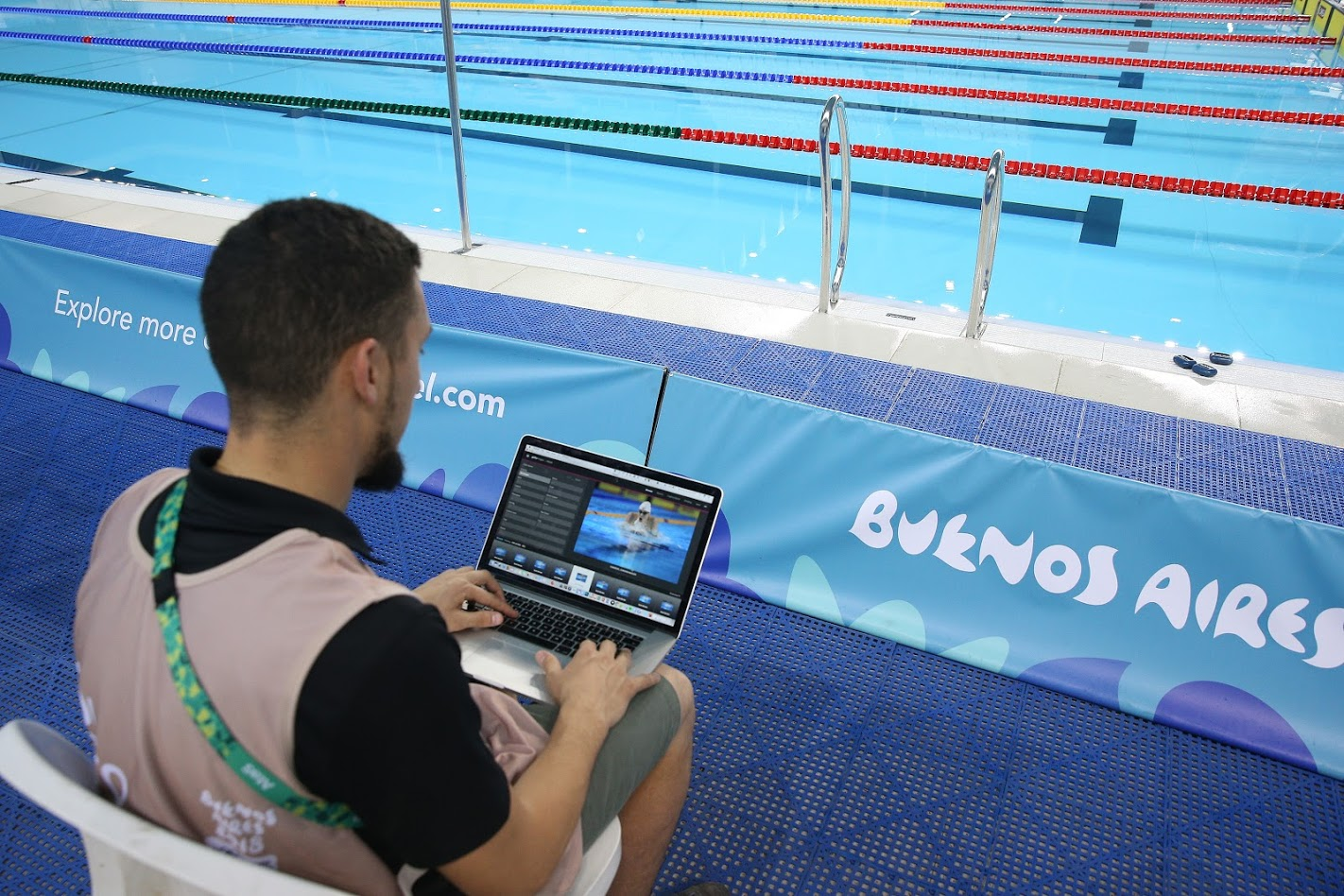
FOCUS at the 2018 Youth Olympic Games
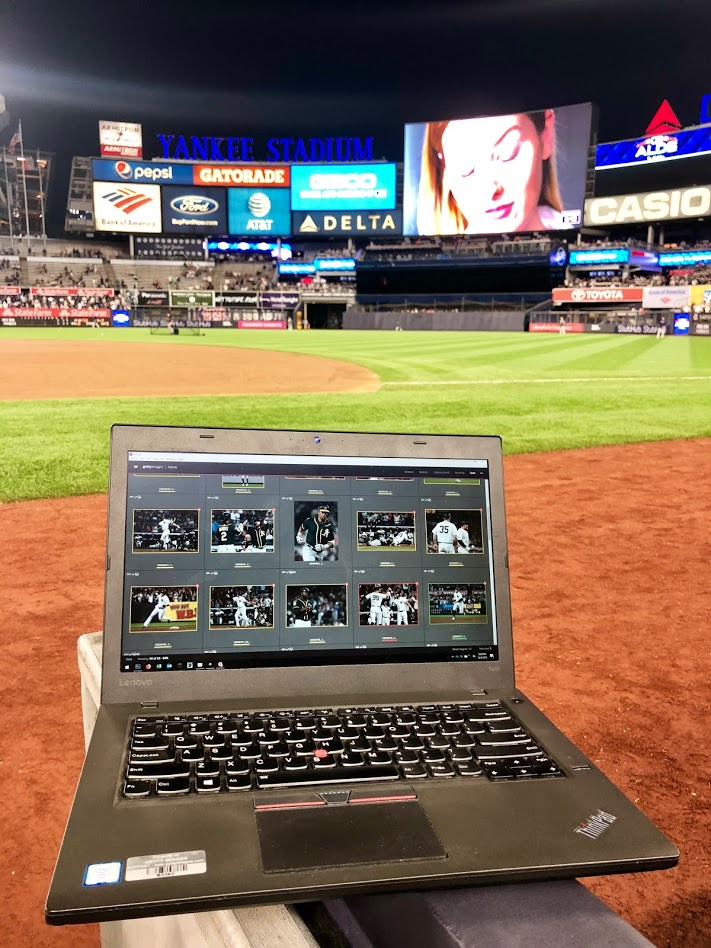
FOCUS at the 2018 MLB playoffs
- Date
- 2017 - 2019
- ROLE
- Senior Designer end to end experience, Visual Design, UX.
- Client
- Getty Images - Field Editors and Photographers at live editorial events such as the Superbowl, Oscars, World Cup and Olympics.
After a careful examination of the Getty Images A to Z contributor experience we identified and prioritized a need to create a piece of software to supercharge our editorial time to market. We decided to create a piece of portable software called FOCUS that Getty Images photographers and field editors would be able to utilize at events regardless of bandwidth or connection. The goals of FOCUS were many-fold but primarily to get as many high quality images to market faster than anybody in the industry.
To accomplish this we took an iterative approach over a two year period. We initially gathered requirements to achieve parody with the legacy process and then broke those into features. Once we were through this phase we began to optimize and solidify the requirements into a piece of software. At this point we began a working group, with our photographers, field editors and event coordinators and began building out workflows. In these working groups we discussed and productionized some of the new concepts we wanted to introduce like off-line editing, auto-resume upload and stateless workflows. After attending a few events and few remote working groups we were able to launch the BETA version and then version 1.0 in Summer of 2018. Case Study